When Starbucks' paper straws sparked a nationwide discussion, corporate social responsibility (CSR) quietly broke through traditional donation models. As the gift industry continues to grow in 2025, more and more brands are integrating environmental concepts into everyday product development, with innovative portable utensils becoming a new way to showcase brand warmth. These products, which combine practical value and communicative power, are reconstructing the connection between business and social value.
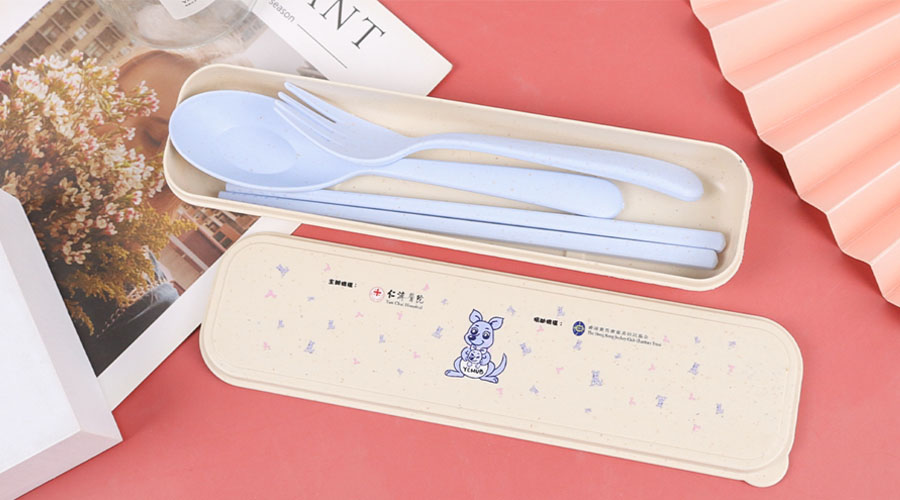
Key Takeaways
- Corporate social responsibility (CSR) is transforming from traditional donation models to integrating environmental concepts into product development, with portable utensils as practical products that not only enhance brand image but also bring visible environmental value.
- Eco-friendly utensils not only meet practical needs but also serve as corporate gifts that strengthen brand impressions, allowing consumers to feel the company's environmental philosophy in daily life, forming deeper brand memories.
- As consumer demand for sustainable products rises, companies gradually achieve synergy in supply chains and product design, promoting the widespread adoption of eco-friendly utensils, creating a symbiotic model of social and business value.
1. The Sustainable Commitment Carried by Utensils
The design breakthrough of eco-friendly utensils begins with material innovation, but its true value lies in conveying the brand promise. The bamboo fiber utensil set launched by a tea brand replaces disposable products with biodegradable materials, annually reducing plastic waste equivalent to protecting the forest area of 15 standard football fields. This tangible expression transforms CSR from an abstract concept into a perceptible daily action. When companies customize such utensils as employee benefits or business gifts, each user becomes a moving brand promoter.
2. Green Empowerment in Gift Scenarios
The gift industry is undergoing an upgrade transition from "gifts" to "value carriers." Customized eco-friendly utensils, with their practicality and memorability, have become the preferred choice for corporate business gifts. A well-known technology company launched a titanium alloy utensil gift box at its new product launch, translating the product's durability into an extension of the brand's professional image through excellent design. Integrating CSR into gift design strategies allows recipients to continuously feel the company's environmental claims in daily use, forming a brand memory that penetrates deeper than traditional advertising.
3. Bi-Directional Construction of Consumer Awareness
Data shows that 85% of consumers in the digital age prefer brands that offer sustainable gifts. When companies use eco-friendly utensils as exhibition souvenirs or client thank-you gifts, they are actually conducting bi-directional education: conveying their philosophy to the market while guiding consumers to establish sustainable consumption habits. A mother and baby brand's collapsible silicone utensil set, distributed as gifts during parent-child experience activities, successfully turned the product into an educational carrier for family eco-friendly practices, with this scenario-based communication allowing the brand's values to infiltrate everyday life.
4. The Sustainable Future of Industry Chain Collaboration
The popularity of eco-friendly utensils compels supply chain upgrades, forming a positive cycle in the industry. The corn starch utensils developed in collaboration between gift manufacturers and material suppliers achieve complete degradation while keeping costs manageable, innovatively lowering the threshold for companies to practice CSR. As more brands include eco-friendly utensils in their gift procurement lists, the effect of scale further drives technological iteration, forming a positive cycle of "demand-research-application." The search volume for reusable utensils on a gift e-commerce platform has grown by 320% in the last three years, confirming the ongoing momentum of this trend.
Standing at a new node in industry development, eco-friendly utensils have transcended simple product categories and become tangible carriers of corporate social responsibility. When a chain catering brand uses customized utensils as member gifts, each consumer who receives one participates in a silent environmental revolution; metal lunch boxes replacing plastic products in business gifts turn each moment of unboxing into a seeding time for sustainable development concepts. Integrating responsibility into daily design wisdom is redefining the value coordinates of the gift industry—not just simple exchanges of items, but the co-prosperity of social value and business value.
In the future, companies will transform environmental concepts into tangible gift forms, providing the most vivid expression carrier for the narrative of brand social responsibility. In the details of each utensil, we can see the possibility of reconciling commercial civilization with natural laws, which is the true essence of sustainable development.
Frequently Asked Questions (FAQ)
Q1:What are the latest trends in corporate social responsibility (CSR)?
A1:Corporate social responsibility (CSR) is no longer limited to traditional donation models, but is integrating environmental concepts into product development, particularly with portable utensils becoming a new way to showcase brand value.
Q2:Why can portable utensils become carriers of brand value?
A2:Portable utensils combine practicality and communicative characteristics, not only reducing plastic waste but also making users brand promoters, further enhancing the brand's image in consumers' minds.
Q3:How can companies use eco-friendly utensils for bi-directional consumer education?
A3:By offering eco-friendly utensils as gifts, companies convey their environmental philosophy while guiding consumers to establish sustainable consumption habits, fostering interaction between the brand and consumers.
Q4:How do eco-friendly utensils promote supply chain upgrades and industry development?
A4:The popularity of eco-friendly utensils drives supply chain upgrades, achieving degradation utensil research and development through collaboration with material suppliers, thus forming a positive cycle that promotes technological innovation and scale effects.


 Service Details
 Projects
 Gallery


 繁體中文(香港)
 繁體中文(澳門)
 繁體中文(台灣)
 简体中文
 English
 日本語
 한국어
 English
 ไทย
 English


 Email
 WhatsApp


 Sign in with Facebook


 Whatsapp
 Facebook
 Line
 Copy Link


